Selling your property can be a reason to celebrate—unless, of course, you never actually listed it.
A Chicago man recently discovered that a home he owned had been posted for sale without his knowledge or approval.
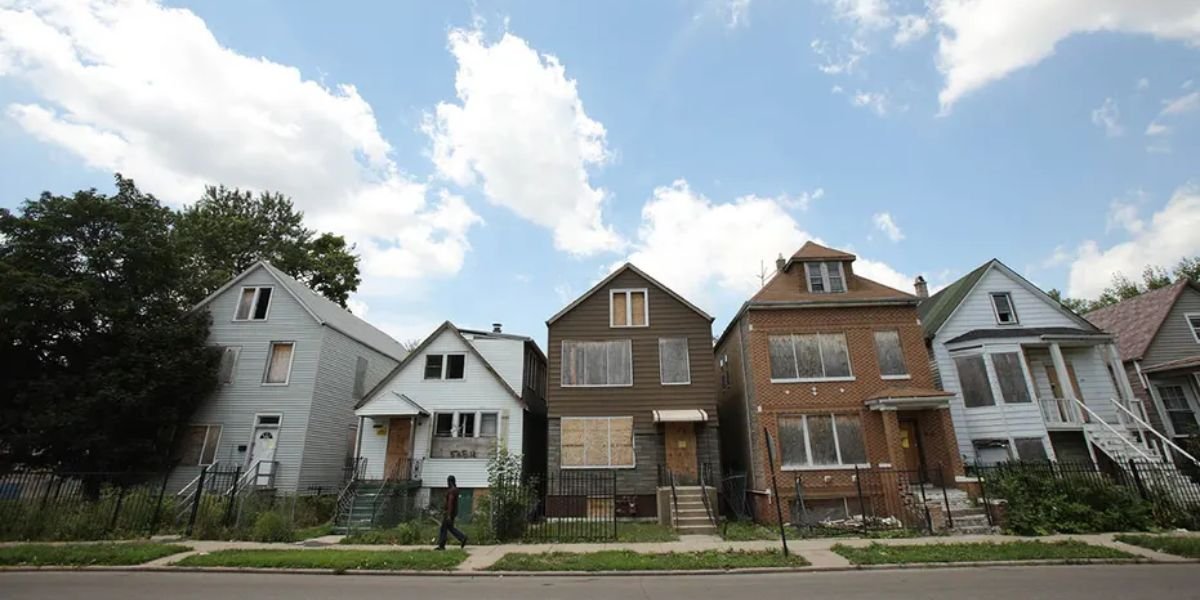
Frank Diaz bought an abandoned fixer-upper on Chicago’s West Side with the goal of flipping it. According to CBS News Chicago, he intended to convert the workers’ cottage into a three-unit building.
“That is what I do.” “I fix them up and then rent or sell them,” Diaz told the news organization. But his plans were nearly disrupted when he realized that someone else had listed the home for sale – without his knowledge or consent.
How a mysterious realtor listed the property without the owner’s permission.
Diaz found in late May that his property had been placed for sale, complete with marketing videos, on a real estate broker’s social media page as well as the Multiple Listing Service (MLS), a property listing and information hub for registered real estate professionals.
The residence was offered as an off-market, all-cash sale for $200,000. Anthony Kirkland, a licensed realtor with Coldwell Banker, was named as the listing agent.
“I have never met him before,” Diaz told CBS News Chicago. However, several of the social media videos were taken inside the house, prompting Diaz to believe that whoever filmed them was trespassing.
The locks had also been changed, and a realtor’s lockbox was installed on the door.
Kirkland informed CBS News Chicago that “somebody was posing as the owner” and that he withdrew the advertisement after becoming aware of it. Despite being the agent who listed the property, he refuses to reveal who initially claimed to be the owner or who gave him permission to list it.
Diaz has now filed an ethics complaint with the Chicago Association of Realtors. “You do your job as a realtor and you reach out,” Diaz told CBS Chicago, “and if they would have done enough digging, they would have known my number, and they would have called me if I wanted to sell the property.”
In a statement to CBS News Chicago, the association stated that when a complaint is filed, “it triggers a formal due process that includes a hearing” that can result in a fine, suspension, expulsion from membership, and possible referral to the Illinois Department of Financial and Professional Regulation.
“I would like to know what happened,” Diaz added. “Someone had listed my property without my consent.”
Title theft is an increasing problem
Diaz is not the only victim of this type of crime. Earlier this year, the FBI’s Boston Division released a statement warning property owners and real estate agents about an increase in “quitclaim deed fraud” cases, often known as home title theft.
The criminals falsify documents to record a fraudulent transfer of property ownership. They can then sell or rent the property, “forcing the actual owners to go to court to reclaim their property.”
“Deed fraud often involves identity theft where criminals will use personal information gleaned from the internet or elsewhere to assume your identity or claim to represent you to steal your property,” the FBI’s Boston office said.
However, deed fraud can take many different forms. For example, fraudsters can search public records for vacant land or properties with no mortgages or liens, then request that a real estate agent list them. Alternatively, family members may target an elderly homeowner and influence them into transferring the property into their name.
While the FBI does not track statistics on quitclaim deed fraud, there were 58,141 documented victims of real estate fraud in the United States between 2019 and 2023, according to the FBI’s Internet Crime Complaint Center (IC3), totaling $1.3 billion in losses.
So, if you own an empty property, you should know how to defend yourself.
Protect yourself against quitclaim deed scam.
David Fleck, a real estate fraud attorney, told Realtor.com that the only way to really protect yourself is to purchase a homeowner’s title insurance policy.
This differs from an owner’s policy of title insurance in that it protects you against fraud after you have purchased the property, whereas standard title insurance only protects you before to purchase.